Luxury travel exists in many forms, yet few experiences leave as deep and lasting an impression as time spent on a yacht. Even seasoned luxury travelers often struggle to articulate why a yacht charter feels fundamentally different from a stay at a five-star resort or a private villa. The distinction is not purely about service levels or amenities. It lies in psychology. Yachting changes how the mind responds to space, time, control, and sensory input in ways that land-based luxury rarely achieves.
The Calming Effect of Water
One of the most powerful psychological elements of yachting is continuous exposure to water. Humans have an innate response to natural water environments, often referred to as blue spaces. Studies consistently show that proximity to oceans, lakes, and coastlines is associated with reduced stress, improved mood, and better overall mental well-being.
A comprehensive review published by the U.S. National Library of Medicine examines how interaction with natural water environments can lower psychological distress and support emotional health. The research can be found here: https://www.ncbi.nlm.nih.gov/books/NBK597114/
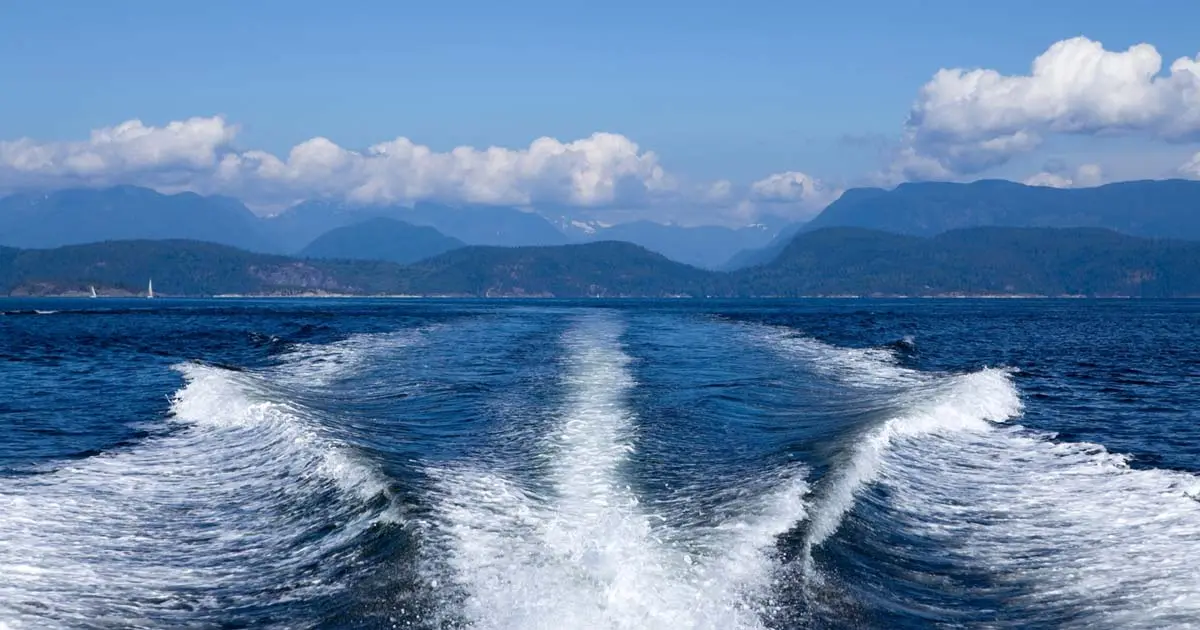
On a yacht, this effect is not occasional but constant. The sound of waves against the hull, the subtle movement of the sea, and uninterrupted views of water surround guests day and night. This sustained exposure helps regulate the nervous system, easing the body out of alert mode and into a calmer, more restorative state. Many guests report better sleep, clearer thinking, and a noticeable reduction in mental tension after only a short time onboard.
Open Horizons and Mental Space
On land, the human brain is constantly processing boundaries. Walls, buildings, roads, and crowds all demand attention. At sea, those boundaries disappear. The horizon becomes continuous and unobstructed, offering a visual simplicity that reduces cognitive strain.
Psychologists describe environments like this as low cognitive load spaces. The brain does not need to interpret complex or rapidly changing stimuli, which allows mental fatigue to subside. The open horizon also promotes a sense of perspective, making everyday concerns feel smaller and less urgent. This is one reason guests often describe a sense of mental clarity while cruising, even without intentionally seeking relaxation.
Control Without Responsibility
Luxury is often associated with control, but on land, control usually comes with responsibility. Planning logistics, managing schedules, and solving small problems can quickly reintroduce stress. Yachting offers a rare balance where guests retain decision-making power without operational burden.
Guests choose where to go, when to stop, and how each day unfolds. The execution is handled entirely by professionals. Navigation, safety, provisioning, and timing all happen in the background. This creates a psychological state where autonomy exists without effort. Instead of managing details, guests focus on experience, which significantly reduces decision fatigue and enhances enjoyment.
A Private and Predictable Environment
A yacht functions as a self-contained world. Unlike hotels or resorts, there are no shared public spaces, no unfamiliar faces appearing unexpectedly, and no external schedules imposed on guests. This predictability creates a strong sense of psychological safety.
Social psychology research shows that environments with reduced social uncertainty allow people to relax more deeply. On a yacht, guests know exactly who is present and how interactions will unfold. The crew becomes a familiar and trusted presence rather than an anonymous service layer. This sense of control over social exposure is especially valuable for guests who seek privacy and calm rather than stimulation.
Time Slows Down at Sea
Another defining psychological feature of yachting is altered time perception. On land, days are segmented by clocks, appointments, and external demands. At sea, time follows natural rhythms. Days begin with sunlight and end when guests feel ready to rest.
Without rigid schedules, people tend to experience time as both slower and fuller. Activities are unhurried, transitions feel natural, and attention remains in the present moment. Psychologically, this shift supports mindfulness and reduces stress. Many guests describe returning home feeling as though they have been away far longer than the calendar suggests, not because of busyness, but because of depth of experience.
Sensory Richness Without Overload
Luxury environments often rely on stimulation. Music, visual drama, social energy, and constant activity are common features of high-end destinations. Yachting offers a different approach. The sensory experience at sea is rich but consistent. Light reflects off the water, the air carries salt and warmth, and the soundscape remains steady and calming.
This balance keeps the senses engaged without causing fatigue. Instead of overstimulation, guests experience grounding. The environment invites awareness rather than distraction, which supports mental restoration over time.
Why the Experience Stays With You
What makes yachting psychologically unique is not any single element, but how these factors work together. Continuous exposure to water, open horizons, effortless control, social predictability, and natural time rhythms combine to create an environment that resets mental patterns rather than merely distracting from them.
This is why many first-time charter guests say their perception of luxury changes after being at sea. Yachting does not just offer escape. It offers recalibration. Stress is reduced, attention is restored, and mental space returns. Long after the charter ends, that feeling often remains, redefining what true luxury means.