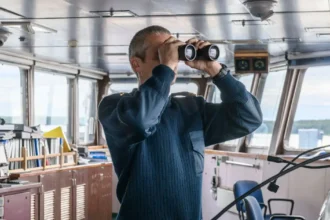
Most coverage of the yacht industry is about the boats: the launches, the layouts, the itineraries, the toys stowed in the garage. Almost none of it is about the people who keep those boats running, who are awake at 3am checking moorings and awake again at 7am setting breakfast, often for months without a proper day off.
That imbalance is becoming harder to justify. A growing body of research, regulation and frontline testimony is pointing to the same conclusion: crew wellbeing is not a side issue in yachting, it is close to the centre of the industry’s safety record, retention problem and reputation, and it deserves far more attention than it gets.
The numbers behind the silence
Lloyd’s Register’s 2026 Yacht Safety Culture and Wellbeing Survey, which polled seagoing crew and shore-based managers on vessels of 24 metres and above, found that engagement (62%), learning (67.7%) and wellbeing (68.9%) all scored below the 70 per cent mark that, per analysis of the survey published in partnership with SuperyachtNews, maritime safety benchmarks treat as signalling a need for urgent action.
Forty per cent of respondents said that safety rules are not consistently followed in practice, even where procedures exist on paper. Crew described being pressured to carry out tasks they considered unsafe to meet guest expectations or commercial deadlines, and many were reluctant to raise concerns because they did not trust that doing so would lead to any real change. None of this reads as a crew that does not care. It reads as a workforce that has learned, through experience, that speaking up rarely changes anything.
A job built for isolation
Yacht crew live where they work, in cabins they often share, on a vessel that may be thousands of miles from anyone they know. Understanding the roles that make up a typical yacht crew hierarchy helps explain why pressure runs unevenly through a boat: the LR survey found that wellbeing on board is disproportionately shaped by a single relationship most crew have no control over, the dynamic between the captain and the owner.
When that relationship is strained, or weighted too heavily towards commercial output, the strain runs down through the entire hierarchy. Add long rotations, limited time ashore, and the particular pressure on engineering teams pushed to turn vessels around quickly after a refit, and the conditions for chronic fatigue and low morale are built into the job itself, not just into a few badly run boats.
What the law is starting to recognise
The Maritime Labour Convention amendments that entered into force on 23 December 2024 are the clearest sign yet that mental health is being treated as a genuine safety issue rather than a personal matter. Under the revised MLC, suicide risk is now explicitly listed as a condition requiring immediate medical care, on the same footing as a broken bone or a severe burn. Shipowners are required to provide connectivity for crew, recognising that contact with home is not a perk but a basic protection against isolation.
Further amendments adopted at the International Labour Conference in June 2025, covering violence, harassment and shore leave rights, are due to enter force by December 2027. Lloyd’s Register has also launched a joint development project with the International Seafarers’ Welfare and Assistance Network specifically to study how welfare affects safety behaviour on yachts, rather than treating the two as separate concerns.
Who picks up the phone when no one else will
Two support services illustrate what is actually reaching crew today. ISWAN’s YachtCrewHelp line, free and confidential, has handled several hundred cases since launching in 2020, from bullying and harassment to loneliness and suicidal thoughts, and exists precisely for crew who have no structured support through their employer.
MedAire’s Emotional Support add-on, available to crew on the many superyachts subscribed to MedAire’s telemedical services, offers confidential access to up to five counselling sessions a year per crew member, with captains describing it as something crew can use without worrying about cost or anyone else finding out, which matters more than it sounds: removing that friction removes one of the main reasons crew hesitate to ask for help in the first place. These services exist because the need is real and ongoing, not because the industry has already solved the problem.
Why this keeps getting treated as a footnote
Wider seafarer research, including a widely cited Yale study for the ITF Seafarers’ Trust surveying more than 1,500 seafarers, found that a quarter had experienced depression and a fifth had contemplated suicide or self-harm within the previous two weeks. That research covers merchant seafarers rather than yacht crew specifically, but the underlying conditions it describes, isolation, confined living, limited autonomy, are familiar to anyone who has spent a season on a charter yacht.
The yacht sector has been slower than commercial shipping to generate its own dedicated data, and slower still to act on what data does exist. Reporting culture is part of the reason. The LR survey noted that even where incidents are investigated, crew often see little follow-through or shared learning, which teaches everyone, without anyone saying so directly, that raising a concern is not worth the risk.
The case for treating wellbeing as infrastructure
It is tempting to file crew wellbeing under human resources, separate from the technical story of how a yacht is built, classed and operated. The research increasingly says otherwise. Fatigue impairs judgement in the same way it does on the bridge of a container ship.
A crew member who does not trust the reporting system is a crew member who may not flag a genuine hazard. An industry that struggles to retain experienced officers and engineers, as the LR data suggests is already happening among longer-tenured crew, is an industry steadily losing the people best placed to keep its vessels safe. Wellbeing, in other words, functions as safety infrastructure, not as a separate and softer concern sitting beside it.
The next big story in yachting may not be a launch, a record passage or a new build. It may simply be the industry deciding that the people running its vessels deserve the same scrutiny, investment and column inches as the vessels themselves.