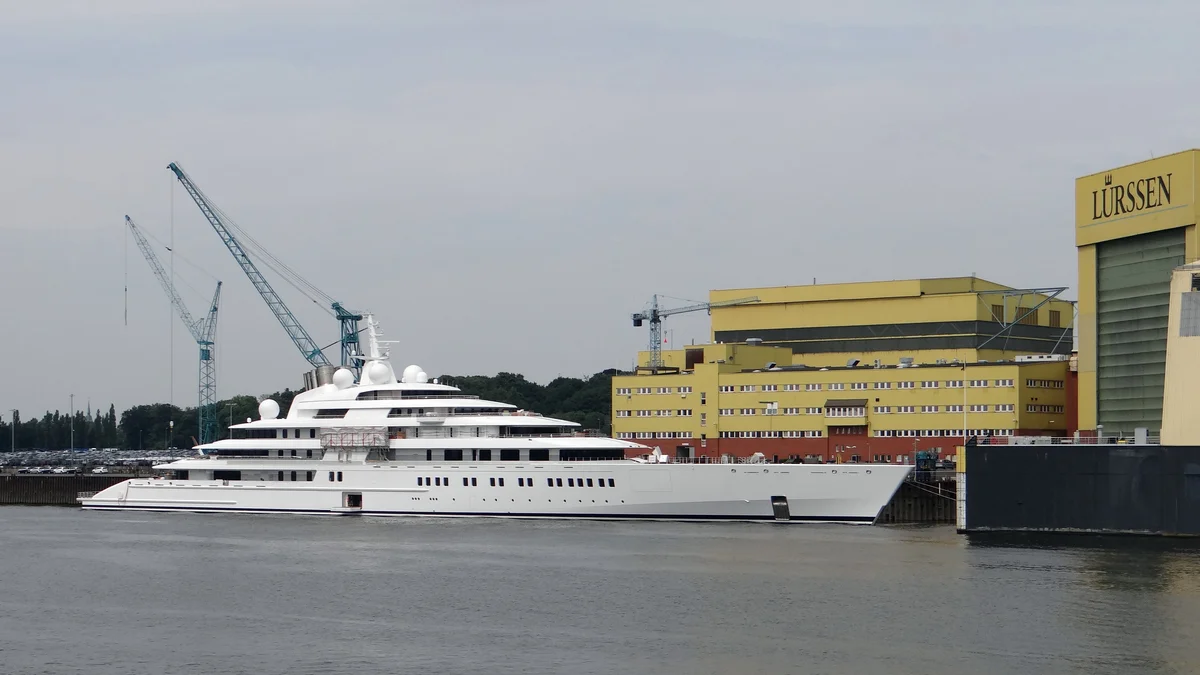
A decade ago, a superyacht over 100 metres was a rarity worth a headline on its own. Today there are more than 80 of them at sea, with dozens more on order books from Bremen to Istanbul. Owners at this level can clearly afford to go bigger. What is less obvious is why, at a time when fuel costs, crew wages and berthing fees all climb with every extra metre of hull, so many of them are choosing to.
A post-pandemic shift in scale
The clearest driver sits in the industry’s own order books. Boat International’s Global Order Book recorded 1,203 superyacht projects in 2023, the all-time high, before easing to 1,166 in 2024 and 1,138 in 2025 as the post-pandemic buying spree settled. What has not eased is the average size of what is being built. The same data shows the average length of superyachts under construction rising from 38.5 metres in 2023 to 40.8 metres in 2026, with average gross tonnage climbing alongside it.
Covid-era buying habits appear to be a large part of the story. With hotels and resorts closed through 2020 and 2021, many owners treated their yacht as a private, controllable retreat for themselves and their families. Barbara Amerio, co-owner of Italian builder Amer, has pointed to a lasting effect of that period: owners asking for bigger windows, more outdoor space and easier access to the water, all of which push hull dimensions upward. The result, as Boat International’s editor-in-chief Stewart Campbell has put it, is that naval architects are now packing far more volume and amenity into every length class, encouraging buyers already in the market to trade up rather than stay put.
Who actually sits above 100 metres
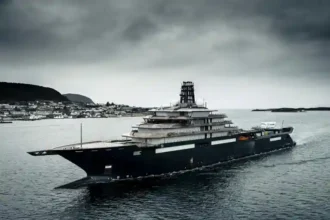
The 100m+ bracket remains a small, closely watched segment of the fleet, and its membership shifts as yachts launch, change hands or are reclassified. Azzam, delivered by German builder Lurssen in 2013, is currently the longest yacht in active service at just over 180 metres, according to SuperYacht Times’ register of the world’s largest yachts. Behind her sit a mix of long-serving giants such as Eclipse and Dubai alongside recent deliveries including Blue, launched in 2022, and Dragonfly and Opera, both completed within the past three years. A number of the yachts due to join that list over the coming year or two are already known to the trade press, and anyone wanting a sense of what is heading into service next could do worse than YLM’s own roundup of the hottest new superyachts launching in 2026.
What stands out in that register is less any single record than the sheer concentration of builders. According to SuperYacht Times’ register, Lurssen alone now has more than 30 yachts above 100 metres in service, a scale no other yard approaches. The clearer signal lies in the current build slate rather than the existing fleet: announced and under-construction projects, including vessels already exceeding 190 metres, continue to push the upper boundary further.
What makes a bigger build possible now
Size at this scale is as much an engineering and commercial problem as a design one. Shipyards able to build at 100 metres plus need dry docks, cranes and workforce depth that smaller yards simply do not have, which concentrates the segment among a handful of specialists in northern Europe and Turkey. Those same yards have spent recent years investing specifically to handle larger hulls, extending slipways, expanding outfitting halls and restructuring how engineering and production teams work together to manage projects of this complexity without the late-stage redesigns that used to plague very large builds.
Internally, naval architecture has moved on too. Hybrid propulsion, more efficient hull forms and smarter structural engineering let builders add volume, extra decks, bigger tenders and helipads without the weight and fuel penalties that scale alone would otherwise demand. That efficiency gain is part of why a modern 100-metre yacht can carry noticeably more usable space than one built twenty years ago on a comparable footprint.
Why owners keep choosing bigger
Commercially, the appeal of scale for an owner breaks down fairly plainly. More length generally means more deck space for separate owner, guest and crew zones, room for a proper office or “work from yacht” setup, and capacity for features that simply will not fit on a smaller platform, from expanded beach clubs to the kind of submarines and helicopters now treated as status symbols in their own right. For owners who charter their yacht to offset running costs, a step up in size and specification can also unlock a different tier of the charter market, something explored in more depth in YLM’s look at who actually owns a superyacht.
There is also a status dimension to this that the industry rarely states outright but does not deny either. At the very top of the size table, a handful of metres separate one yacht from the next, and that gap is public, measurable and closely tracked by the trade press. For owners already competing on nearly every other front, that visibility is its own kind of motivation.
The shipyards carrying the weight
According to Boat International’s Global Order Book, roughly half of all superyachts are still built in Italy, whose yards are currently working on a combined length of yachts that would stretch for more than 20 kilometres if laid end to end. Turkey has grown quickly into second place, with yards such as Bilgin investing heavily in facility upgrades specifically to support concurrent, large-scale builds. The Netherlands, Germany and the UK round out the next tier, each home to yards that specialise in very large, highly custom projects rather than volume production.
That concentration of capability is itself a constraint on how fast the segment can grow. Building reliably above 100 metres demands skilled labour, specialist subcontractors and dock space that cannot be conjured quickly, which is why shipyard executives now talk less about explosive expansion and more about disciplined, well-executed growth within the capacity they already have.
A segment still finding its ceiling
None of this suggests the 100m+ bracket is about to become common. It remains, and will likely remain, the preserve of a small number of owners and an even smaller number of yards capable of building at that scale. But the direction is clear enough: average lengths are rising, order books are tilting toward bigger hulls, and the yards with the capacity to build them are investing accordingly. For now, the giants are not finished growing.