For much of the last decade, a superyacht interior was judged chiefly by what could be photographed: a sculptural staircase, a wall of uninterrupted glazing, an unbroken run of rare marble. Interiors were conceived as moments to be surveyed, status rendered in finishes. That bar has not disappeared, but in 2026 it has stopped being sufficient on its own. Designers across the industry are increasingly asked a different question: not simply how a space looks, but how it makes the people living inside it feel over days or weeks at sea.
Material Honesty Over Decoration
Natural stone, reclaimed and fumed timbers, and sustainably sourced textiles have moved from occasional flourish to default specification on new builds and major refits. Travertine, limestone, rattan and limed oak now appear as structural choices rather than accents, prized for grain, texture and the small imperfections that make a surface read as genuine rather than manufactured.
Patrick Domnanich of luxury interiors manufacturer F/LIST has described genuine materials such as marble, granite and slate as being perceived as more honest, permanent and trustworthy than their synthetic equivalents. That perception is doing real commercial work. Owners commissioning at the top of the market increasingly expect a specification that can justify itself beyond expense, not simply display it.
Light as a Biological Tool
Lighting has undergone a similar rethink. Rather than functioning purely as decoration or mood-setting, circadian lighting that mimics the shifting spectrum and intensity of daylight is being specified to support sleep, hormone regulation and alertness, particularly useful for guests adjusting across time zones.
Sally Storey, founding director of Lighting Design International, has argued that the best practice for circadian health is bright, blue-rich light shortly after waking, dimming to warmer tones in the hours before bed. On well-specified yachts, that logic is now built into blinds, joinery and ceiling fixtures rather than left to a dimmer switch, and increasingly extends to crew quarters as well as guest cabins.
Spaces Designed to Be Felt, Not Just Seen
This thinking sits under a broader label gaining traction in the industry: neuroarchitecture, the study of how light, acoustics, materials and spatial layout affect mood, stress and recovery. It is closely related to the biophilic principles already explored in The Psychology of Luxury at Sea, which examined why time on the water affects guests differently to time on land.
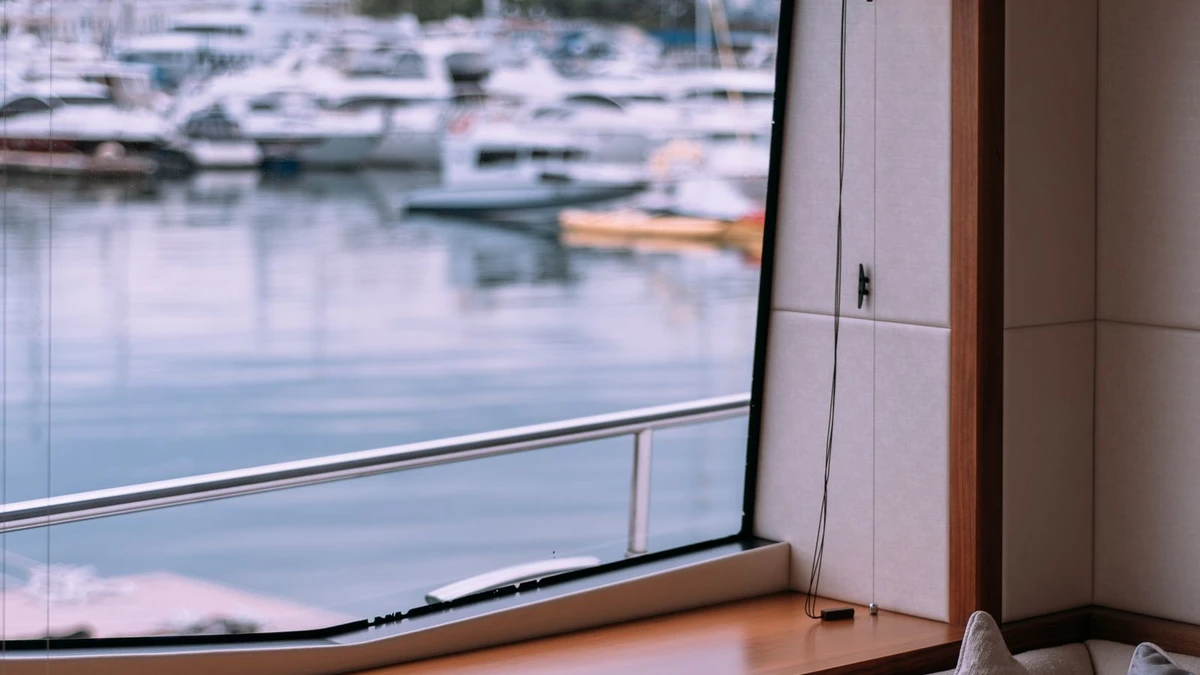
The practical result is interiors that balance openness with enclosure. Panoramic glazing remains a selling point, but designers are increasingly pairing it with window seats, reading alcoves and furniture set against solid walls, small interventions that make a vast space feel secure rather than exposed. Acoustic treatment and low-VOC materials, once a wellness afterthought, are now treated as part of the same brief.
Open-Plan Living and the Return of Retreat
Open-plan saloons and indoor-outdoor flow are far from new, but 2026’s builds show a more deliberate balancing act between open, social space and genuine retreat. This is partly a layout conversation as much as a decorating one, and it connects directly to the structural questions raised in Understanding Yacht Layouts, where deck arrangement rather than aesthetics was the focus.
The 35-metre Van der Valk Lalabe is a useful example. Designed by Guido de Groot for a multigenerational family planning extended time aboard, its upper saloon and aft deck can convert between an enclosed room, a winter garden and an open veranda. Flexibility, rather than a single fixed statement, is increasingly the brief.
Technology That Disappears
Smart-home integration continues to expand on new builds, from climate and lighting control to onboard entertainment and security, but the more notable shift is how little of it is meant to be seen. Systems are being built into joinery, ceilings and glazing rather than presented as visible hardware, so that the technology supports comfort without competing with the materials around it.
What This Year’s Award Winners Reveal
The 2026 Boat International Design & Innovation Awards, judged at the Superyacht Design Festival in Kitzbühel, offered a useful snapshot of where interior design currently stands. Breakthrough, Feadship’s 118.8-metre hydrogen fuel cell project designed by RWD, took Best Interior Design for motor yachts over 1,000GT. Inside, more than one hundred shades of white and off-white were offset against travertine stone, rattan weave and fumed eucalyptus joinery, bringing intimacy to an exceptionally large interior.
At the other end of the scale, Achille Salvagni’s interior for the 47-metre Cantiere delle Marche RJ favoured organic forms and light koto wood over nautical styling, while Rémi Tessier’s Japanese-influenced work on the Perini Navi sailing yacht Katana demonstrated restraint as its own form of luxury. Winch Design founder Andrew Winch, whose studio has shaped the sector for four decades, received the Lifetime Achievement Award. Taken together, the winners point towards personalisation rather than a single dominant aesthetic, with natural materials and residential influence as the common thread running through otherwise very different briefs.
The Feeling Is the Point
None of this amounts to a single new style. What connects a hydrogen-powered 119-metre flagship with a 35-metre family cruiser is a shared assumption that an interior’s real test comes after the first impression, in how it performs over a week of actual living. Materials, light and layout are being treated as functional decisions with psychological consequences, not finishing touches applied once the important choices are made.
That shift is likely to keep gathering pace as more owners commission with extended time aboard in mind rather than a single charter season. The yachts that will be remembered are unlikely to be the ones that simply looked the most striking in a launch photograph.